Community Compost Program
Creating kitchen scraps is inevitable, but it doesn’t have to be a waste. Learn how we’re redirecting organic materials from landfill to forest. Our Community Compost Program operates spring through fall when we’re able to rinse buckets for you outside. Start your journey today!
Why is food waste in landfills is a problem?
When food scraps end up in landfills, food rots instead of decomposing. Rotting food produces methane, a problematic greenhouse gas which contributes to climate change. The Environmental Protection Agency estimates that food in landfills produces 58% of all methane emissions.
What’s the solution?
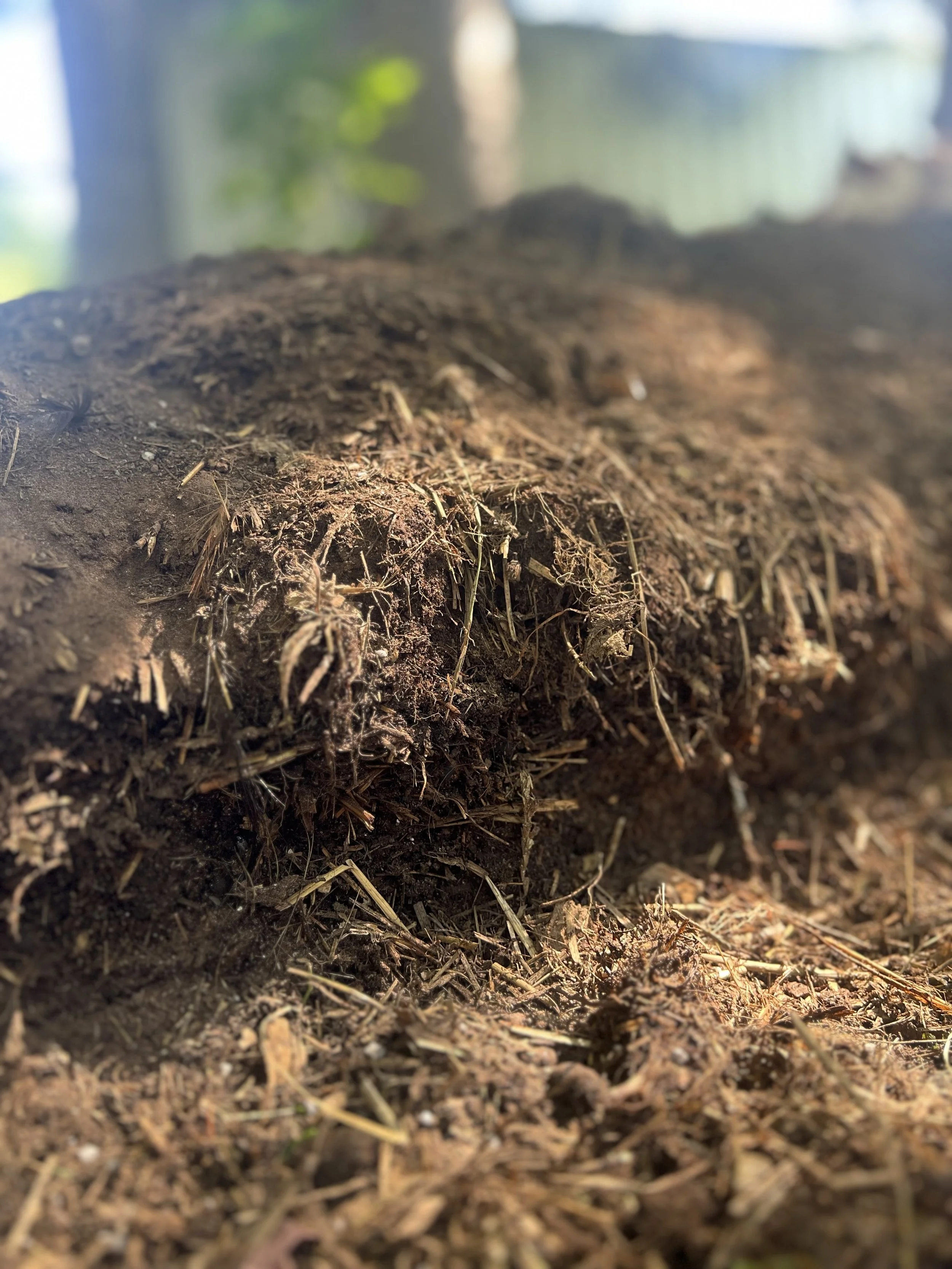
Composting! In an oxygen-rich environment like our chicken-scratched compost pile, organic materials decompose and return nutrients to the soil. This decomposition produces carbon dioxide instead of methane. Carbon dioxide is much less problematic for the environment than methane.
How do I get started?
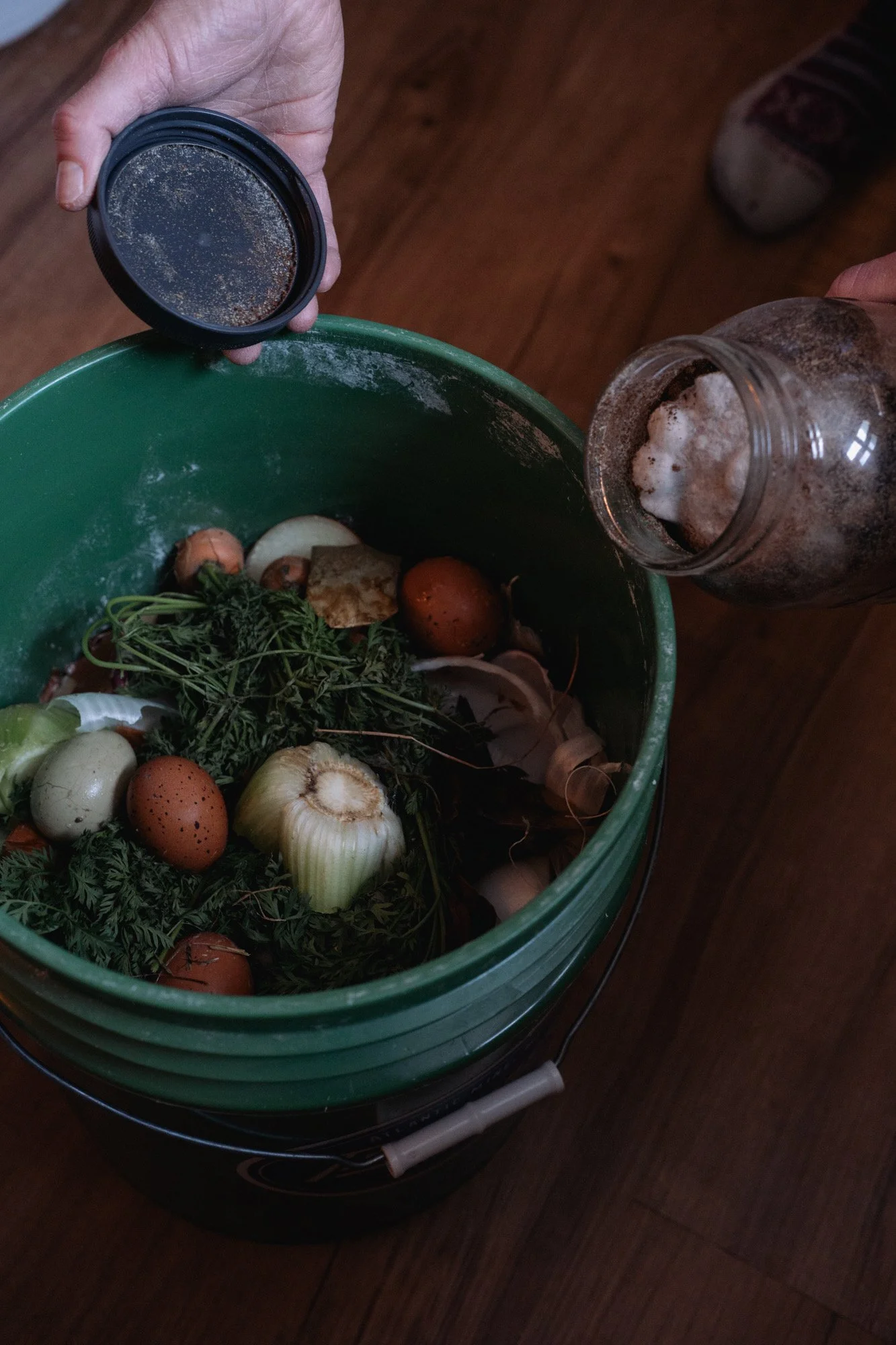
Simply borrow a 5-gallon bucket and lid from us. When the bucket is full, drop it off at the farm and grab a new empty/rinsed bucket! We have a designated drop off area just outside the chicken coop. We’ll take care of the dumping and rinsing.
Isn’t it smelly?
Not if you sprinkle about a tablespoon of bokashi on top of every inch depth of compost added to the bucket. Bokashi will ferment (instead of rot) the organic material and dramatically reduce the smell. You’re welcome to borrow a jar of bokashi from the farm.
What exactly is bokashi?
Microbes! Bokashi is simply rice bran inoculated with beneficial bacteria and yeast break ferment or pre-compost waste.
Can I keep my compost bucket outside?
No - wildlife will inevitably be attracted to and break into your bucket. Any destroyed or unreturned buckets will incur a replacement fee.
Is it free?
Yes, in fact, you’re welcome to borrow a 5-gallon bucket and lid as well as a jar of bokashi.
Do you pick up compost?
If you have enough to offer! We are happy to arrange a time to pick up compost if you have ten or more filled 5-gallon buckets. We already collect bulk compost from food establishments like Velodrome Coffee and Living Proof Brewing Company.
Do you accept compostable plastics?
No. Even plastics marketed as “home compostable” take a long time to break down. The safety of bioplastics in soil is hotly contested and we err on the side of caution.
What do you do will all the finished compost?
We apply finished compost to wildlife food sources in the forest. Because we accept all food scraps (including non-organic that may have pesticide residues) we do not apply the compost to our Certified Naturally Grown garden. We are highly selective about what goes into our garden soil that feeds our produce.